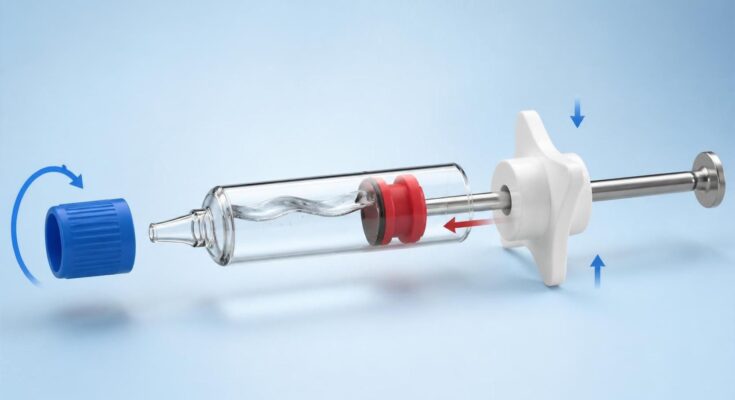
Prefilled syringe systems have become an increasingly popular choice for delivering injectable medications due to their convenience, accuracy, and reduced risk of contamination. While the drug itself is the primary focus, the performance of the system depends on several carefully engineered syringe components working together seamlessly. Among the most important are the tip cap, backstop, and plunger, each serving a distinct function that contributes to product safety, usability, and reliable drug delivery.Understanding how these components interact helps pharmaceutical manufacturers, medical device engineers, and healthcare professionals appreciate the importance of an integrated syringe design.
The Role of the Tip Cap
The tip cap is one of the first components a user interacts with before administering an injection. Positioned at the front of the prefilled syringe, it seals the syringe tip to maintain sterility and prevent medication leakage during storage and transportation.
An effective tip cap performs several critical functions. It creates a secure barrier against environmental contaminants, helping preserve the integrity of the sterile drug product. It also prevents moisture loss or air ingress that could affect sensitive biologic formulations. During shipping, the tip cap must remain securely attached despite temperature fluctuations, vibration, and handling, while still being easy for healthcare professionals or patients to remove when required.
Material selection is equally important. Many tip caps are manufactured from elastomeric materials combined with rigid polymer components to provide both flexibility and a reliable seal. Compatibility testing is essential to ensure the materials do not interact with the drug formulation or introduce extractables and leachables that could compromise product quality.
Ultimately, the tip cap protects both the medication and the patient until the moment of administration.
Understanding the Function of the Plunger
The plunger is the driving force behind drug delivery. Located inside the syringe barrel, it forms a seal against the inner wall and moves forward as pressure is applied, expelling the medication through the needle.
An effective plunger must provide consistent movement while maintaining an airtight seal throughout the injection process. If the seal is too tight, excessive force may be required, making the injection uncomfortable or difficult. If the seal is too loose, leakage or inconsistent dosing may occur.
Manufacturers carefully engineer plungers using specialized elastomer materials and silicone lubrication to achieve smooth gliding performance while maintaining sealing integrity. Modern formulations also focus on reducing particle generation and minimizing interactions between the plunger material and sensitive biologic drugs.
Plunger design directly influences several important performance characteristics, including glide force, break-loose force, injection consistency, and overall user experience. As self-administration becomes increasingly common, optimizing plunger performance has become a major priority for pharmaceutical companies developing patient-friendly delivery systems.
Why the Backstop Matters
Although often overlooked, the backstop plays an essential ergonomic role within a prefilled syringe system. Positioned at the rear of the syringe, it provides a stable surface for the user’s fingers during injection while helping maintain control of the device.
The backstop improves handling by creating a secure grip that reduces the likelihood of slipping during administration. This becomes especially valuable for elderly patients or individuals with reduced hand strength or limited dexterity.
In addition to improving usability, the backstop also supports consistent injection technique. Better stability allows users to apply force more evenly to the plunger, contributing to smoother medication delivery and improved dosing accuracy.
Backstops may be integrated directly into the syringe design or added as separate accessory components depending on the intended application. Their dimensions, shape, and material are carefully optimized to complement the overall device ergonomics.
How These Components Work Together
While each component performs an individual function, the true effectiveness of a prefilled syringe comes from how these elements operate together as a complete system.
The tip cap protects the sterile drug product throughout storage and transport until the moment of use. Once removed, the backstop provides stability and control as the user grips the syringe. The plunger then delivers the medication at a controlled rate while maintaining a reliable seal inside the barrel.
Any weakness in one component can affect the performance of the entire system. For example, a poorly fitting tip cap could compromise sterility, an unstable backstop may reduce user confidence during injection, and inconsistent plunger movement could lead to increased injection force or incomplete dose delivery.
For this reason, manufacturers evaluate these components collectively rather than individually during product development. Comprehensive testing includes container closure integrity, mechanical performance, usability studies, material compatibility, and long-term stability assessments to ensure reliable performance throughout the product lifecycle.
Supporting Modern Drug Delivery
As biologics, biosimilars, and high-value injectable therapies continue to grow, prefilled syringe technology is evolving alongside them. Drug formulations are becoming increasingly sensitive, while patients expect delivery devices that are intuitive, comfortable, and dependable.
Innovations in materials science, component manufacturing, and precision engineering continue to improve the performance of tip caps, plungers, and backstops. Enhanced elastomers, improved lubrication technologies, and tighter manufacturing tolerances all contribute to greater consistency and patient safety.
Designers are also considering human factors earlier in the development process, ensuring that syringe systems meet the needs of diverse patient populations, including those performing self-injections at home.
In Short
Although they may appear to be simple parts, the tip cap, backstop, and plunger each play a critical role in the performance of a prefilled syringe system. Together, these carefully engineered syringe components protect the medication, maintain sterility, improve handling, and ensure accurate drug delivery from storage through to administration.
As injectable therapies continue to advance, the importance of integrating high-quality components into a cohesive syringe system will only increase. By understanding how these elements work together, manufacturers can develop safer, more reliable drug delivery solutions that support better patient outcomes and meet the growing demands of modern healthcare.